.svg)
.svg)


.webp)


.svg)
A tenant moves out every 12 to 24 months on average, and the floor takes the brunt of that turnover: dragged furniture, pet claws, dropped pans, and cleaning crews who don't treat the unit like their own home. Simple Flooring installs and replaces flooring in rental units across Chicagoland through our Chicago flooring installation services, and this guide breaks down which materials survive tenant turnover, what they cost, and where landlords lose money on the wrong pick.
Quick answer: Rigid-core luxury vinyl plank (LVP/SPC) and porcelain tile hold up best across most rental units, while wall-to-wall carpet and solid hardwood create the most turnover cost.
What Rental-Ready Flooring Has in Common
A rental floor answers to a different owner than a personal home does. A tenant who doesn't own the surface has less reason to protect it, so the materials that perform best share a few traits: a waterproof or water-resistant core, a wear layer thick enough to survive move-out scuffs, and a repair method that doesn't require redoing an entire room over one damaged plank.
- Best overall durability: Rigid-core LVP or SPC vinyl plank.
- Longest lifespan in wet areas: Porcelain or ceramic tile.
- Fastest, cheapest turnover repair: Individual plank or tile replacement rather than full-room refinishing.
- Worst long-term value for most units: Wall-to-wall carpet in living areas and hallways.
The sections below break down each material's real-world performance, then match them to specific rooms and rental types.
5 Flooring Materials That Survive Tenant Turnover
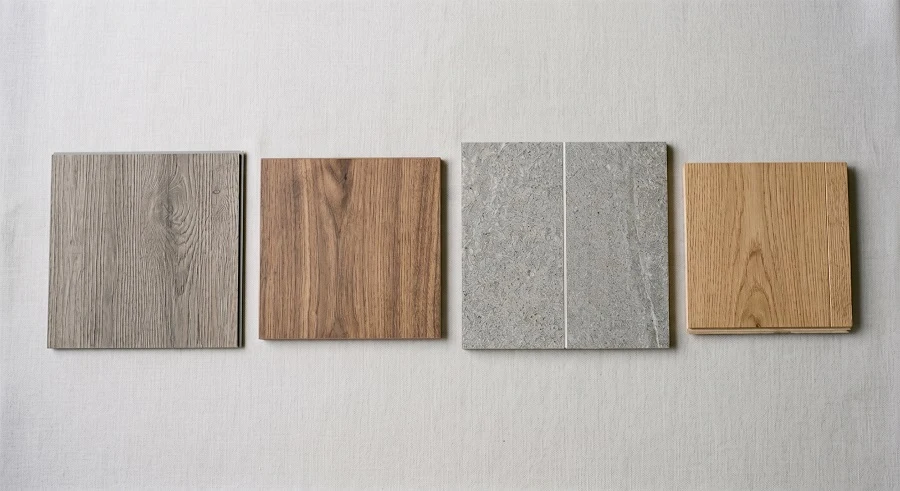
Not every product marketed as rental-grade actually performs like one. The five materials below cover most rental units, ranked by how they hold up to tenants rather than how they look on a showroom sample.
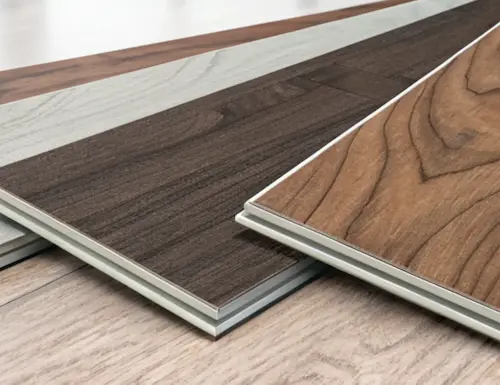
Luxury Vinyl Plank and SPC Vinyl
Rigid-core luxury vinyl with an SPC (stone polymer composite) core is fully waterproof and resists denting far better than older WPC or standard vinyl cores. A wear layer of 12 mils or higher stands up to pet claws, moving dollies, and repeated cleaning without showing wear after one lease term. Because it installs as a floating floor over most subfloors, a damaged plank can be replaced without tearing up the whole room. Installed cost runs $4 to $8 per square foot, and most commercial-grade products carry a 10 to 20 year wear warranty.
Laminate Flooring
Laminate uses a fiberboard core topped with a photographic wood-look layer and a clear wear coat, which keeps material cost low while resisting surface scratches. The core is the weak point: any laminate not rated waterproof will swell and delaminate once water sits on a seam, which rules it out for kitchens, bathrooms, and basements.
Composite-core products, including many laminate and engineered wood floors, fall under the EPA's formaldehyde emission standards under Title VI of the Toxic Substances Control Act, so confirm a supplier's TSCA Title VI compliance labeling before ordering. Installed cost runs $3 to $7 per square foot.
Porcelain and Ceramic Tile
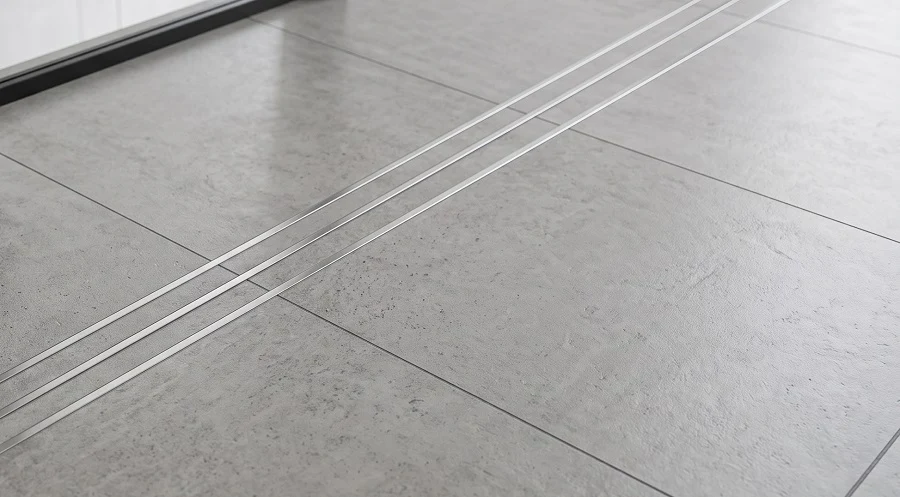
Tile is the most water-resistant flooring on this list and shows almost no wear from foot traffic or repeated cleaning between tenants. A PEI rating of 4 or higher holds up to years of turnover without surface dulling. The tradeoff is a hard, cold surface underfoot and grout lines that need periodic sealing to resist staining. Installed cost runs $8 to $15 per square foot, and a well-installed floor can outlast 20 years of tenants.
Engineered Hardwood
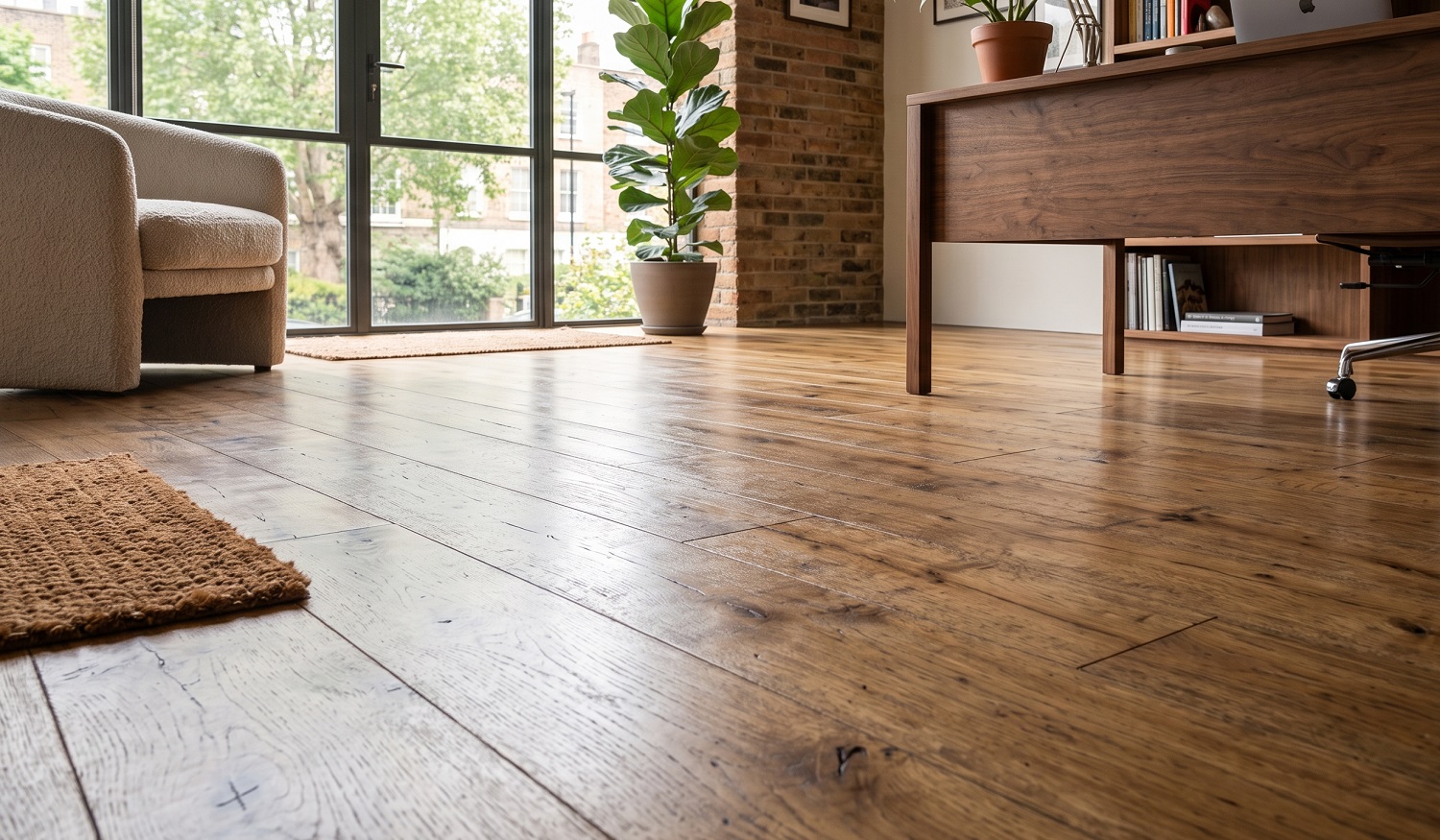
Engineered hardwood uses a plywood core under a real wood veneer, which resists the warping that solid wood suffers from Chicago's humidity swings. That stability gap against solid wood is covered in our engineered vs. solid hardwood comparison. It reads as a premium upgrade to prospective tenants, but it remains a wood product: scratches, dents, and standing water will still damage it, and refinishing between tenants is a disruptive, multi-day job. Installed cost runs $7 to $12 per square foot.
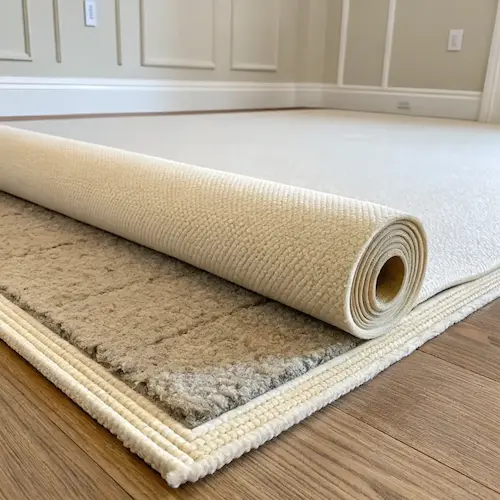
Carpet and Carpet Tile
Standard broadloom carpet is the cheapest material to install but the most expensive to own over several lease cycles. It absorbs odors, stains, and allergens in a way hard surfaces don't, and most rental-grade carpet needs replacement every 3 to 5 years regardless of care. Carpet tile solves part of this problem: individual tiles swap out when one section stains or wears, cutting replacement cost without redoing the whole room. Installed cost runs $2 to $6 per square foot for broadloom and $3 to $8 per square foot for tile.
Flooring Costs and Lifespan, Side by Side
Cost per square foot only tells part of the story. The table below lines up installed cost against how long each material actually lasts under tenant use, so the cheapest option on move-in day doesn't turn into the most expensive one by year three.
A $3 laminate that needs full replacement after one flooded dishwasher costs more than an SPC plank that survives the same spill untouched.
The Flooring to Avoid in a Rental Property
Two materials show up on move-in day looking like a bargain and end up costing more than the premium options by the second or third tenant.
- Wall-to-wall carpet in living areas: Traps pet dander, cigarette residue, and cooking odors in the padding, and no amount of professional cleaning fully resets it between tenants.
- Solid hardwood in high-turnover units: A single plumbing leak or an unreported pet accident can cup or warp boards permanently, and refinishing between every lease cycle isn't realistic for most rental budgets.
Both materials still have a place (carpet in a low-traffic bedroom, solid wood in an owner-occupied home), but neither belongs in a high-turnover living area or entryway.
Best Flooring for Pet-Friendly Rentals
Roughly two in three U.S. renters own a pet, which makes scratch resistance and moisture protection a financial decision, not a preference.
What Works with Pets
- SPC luxury vinyl plank: Resists claw marks and stands up to accidents without swelling.
- Porcelain tile: Immune to scratches and fully waterproof, though cold underfoot.
- High-mil wear layer LVT: A softer, warmer alternative to tile with similar scratch resistance.
What to Avoid with Pets
- Wall-to-wall carpet: Holds odor and stains from accidents long after surface cleaning.
- Solid or unfinished hardwood: Claws dull the finish, and accidents can permanently cup boards.
- Low-mil laminate: A thin wear layer scratches quickly under regular claw traffic.
#cta_start
The Wrong Floor Costs You at Every Turnover
A swollen laminate plank or a stained wall-to-wall carpet means paying for the same floor twice. Our installers walk your unit first and match the material to your tenants before you buy.
#cta_end
Matching Flooring to Wet and Dry Rooms
Wet rooms and dry rooms put different demands on a floor, and splitting material choice by room protects the budget in the areas most likely to flood, stain, or scratch first.
Bathrooms, Kitchens, and Entryways
These rooms see the most water exposure and the most foot traffic tracked in from outside. Porcelain tile or waterproof SPC vinyl handle standing water and repeated mopping without damage, and both clean up fast between tenants.
Bedrooms and Living Areas
Dry rooms allow more flexibility. LVP delivers a warm, wood-look surface at a lower long-term cost than engineered hardwood, while laminate remains a workable budget option as long as the room stays dry and pet-free.
Flooring Needs by Rental Type
The right material also depends on how often the unit turns over.
Single-Family and Long-Term Rentals
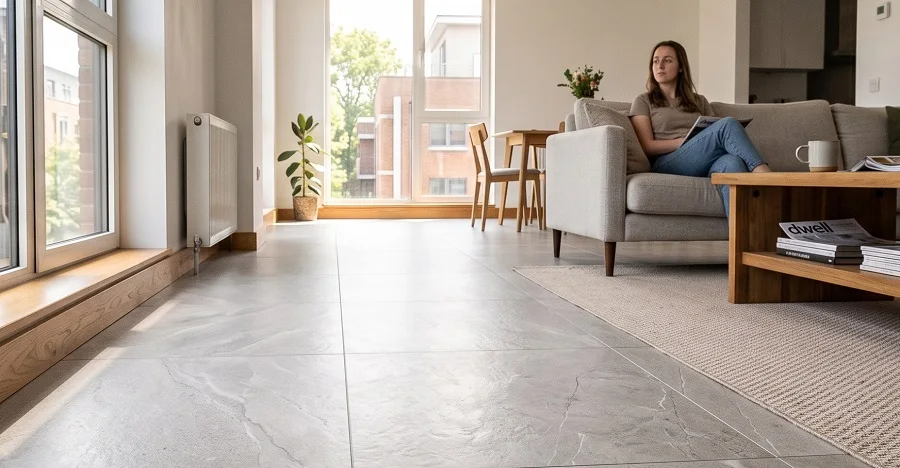
Longer tenancies justify a modest upgrade, since the flooring absorbs less wear per year. Engineered hardwood in main living areas paired with tile in wet rooms supports higher rent without the risk that comes with solid wood.
Multi-Unit and Short-Term Rentals
High-turnover units need a single, repairable material running through the whole space. SPC vinyl plank throughout, with tile limited to bathrooms, keeps repair stock simple and lets a maintenance crew swap one damaged plank in minutes between guests or leases.
Flooring Damage and Illinois Security Deposit Law
Flooring damage is one of the most common security deposit disputes between landlords and tenants. Under the Security Deposit Return Act, 765 ILCS 710/1, an Illinois landlord who deducts for property damage must send an itemized, receipt-backed statement within 30 days of move-out. As of 2024, this requirement applies regardless of building size.
- Generally counts as wear and tear: A dulled finish from years of normal foot traffic.
- Generally counts as chargeable damage: A deep gouge, an untreated pet stain, or warping from a spill left unattended.
Dated move-in and move-out photos, plus installation invoices, give a landlord the documentation this statute requires if a deduction is ever challenged.
The Right Flooring Pays for Itself Between Tenants
The cheapest flooring on move-in day rarely stays cheap once tenants, pets, and turnover cycles run their course. LVP and porcelain tile cost more upfront than laminate or carpet, but the lower repair frequency and longer lifespan pay that difference back within a few lease terms, while a flooded laminate floor or a stained wall-to-wall carpet turns into a bill every time a tenant moves out.
Simple Flooring installs LVP, porcelain tile, laminate, and engineered hardwood in rental units and multi-family buildings across Chicagoland, and we match the material to how tenants actually use the space rather than defaulting to whatever is cheapest to source. Contact us for a walkthrough and quote before your next turnover.