.svg)
.svg)


.webp)


.svg)
More Illinois homeowners are asking an important question before a flooring project: is there a way to get a durable, beautiful floor without the environmental trade-offs? The answer is yes — and the options have improved significantly. Sustainable flooring used to mean compromising on appearance or performance. That's no longer the case.
As experienced flooring contractors, we work with eco-conscious materials regularly. This guide starts with the options Simple Flooring actually installs, then covers what else is available on the market — so you have the full picture before deciding.
What "Eco-Friendly" Actually Means in Flooring
The term gets applied broadly, so it helps to know what to look for. A genuinely sustainable floor checks at least one of three criteria: it comes from a renewable or responsibly managed source, it's made from reclaimed or recycled material, or it has low chemical emissions that protect indoor air quality.
Certifications worth knowing:
The Forest Stewardship Council (FSC) is the most rigorous standard for wood products — it ensures forests are harvested at rates that support long-term regeneration, with biodiversity and water quality actively protected. FloorScore certification covers indoor air quality, testing for 76+ chemicals, including formaldehyde. GREENGUARD Gold sets stricter limits, appropriate for homes with children or anyone with respiratory sensitivities.
If a product can't tell you where the material came from and carries no third-party certification, that's useful information before you commit.
FSC-Certified Hardwood: Responsible Sourcing, Same Great Floor

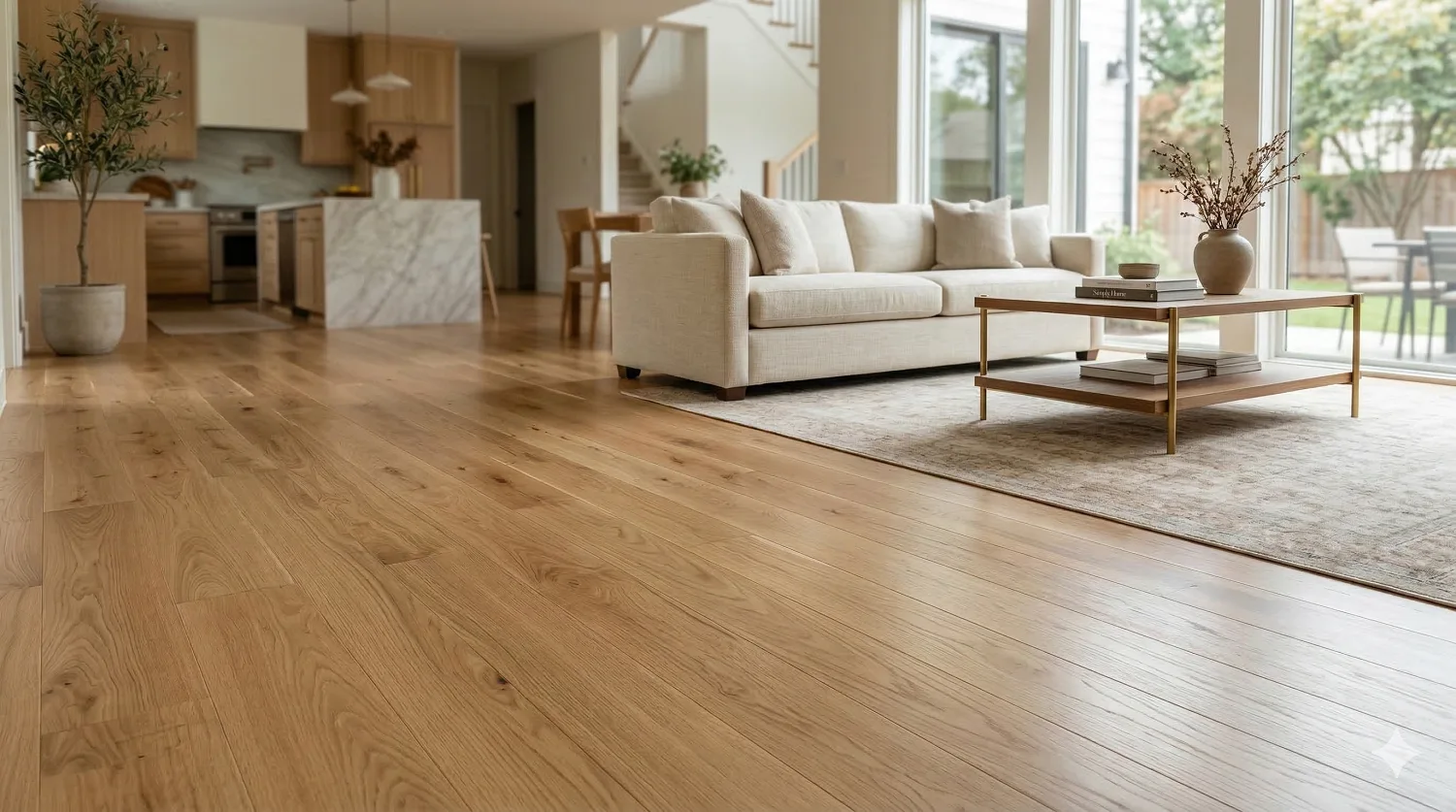
FSC-certified hardwood looks and performs identically to conventional hardwood. The difference is traceability: every plank carries a chain-of-custody number linking it back to its source forest, where selective harvesting — not clear-cutting — is the standard practice.
American white oak and maple are among the most widely available FSC-certified domestic species. Domestic sourcing matters here beyond just certification: transportation is a significant part of any material's carbon footprint, and locally sourced wood arrives with a much smaller one.
From a sustainability standpoint, hardwood's longevity is its own argument. A floor that lasts 75–100 years and gets refinished rather than replaced generates far less waste over its lifetime than any cheaper material replaced every 10–15 years. That refinishing capability — unique to hardwood — is worth factoring into any environmental calculation.
See our hardwood flooring installation service and guide to wood species.
Reclaimed Wood: Zero New Trees, Maximum Character

Reclaimed wood repurposes timber from demolished structures — old barns, warehouses, industrial buildings. No new trees are cut. In many cases, the wood is old-growth timber that's denser and more dimensionally stable than anything available from new-growth forests today.
What to verify before purchasing:
Quality reclaimed wood is kiln-dried, milled flat, and inspected for contaminants like lead paint or old adhesives. A reputable supplier documents the source. If that information isn't available, look elsewhere.
The aesthetic is genuinely distinctive — nail holes, saw marks, and aged patina that no manufactured product replicates. Chicago's ongoing building renovation activity produces a steady local supply of quality reclaimed timber, which keeps both the carbon footprint and the sourcing story short.
#cta_start
Want Eco-Friendly Flooring Without the Guesswork?
Our team helps Illinois homeowners find certified, low-emission options that actually hold up — straight answers, no sales pressure, and a free in-home estimate.
#cta_end
Engineered Hardwood: Resource-Efficient Without Sacrificing Looks
Engineered hardwood doesn't always get credit for its sustainability angle, but the argument is sound. Each plank uses a thin real-wood veneer over a plywood core — significantly less solid wood per square foot than traditional hardwood while delivering the same surface appearance and feel.
FSC-certified engineered hardwood is available and worth specifying. It also handles Illinois humidity swings better than solid wood, which extends service life and reduces the frequency of replacement — another quiet environmental benefit.
Veneers above 3mm can typically be refinished once or twice, adding decades to the floor's useful life. Read our full engineered hardwood guide.

Low-VOC Vinyl (LVP): Not Renewable — But It Can Be Low-Emission
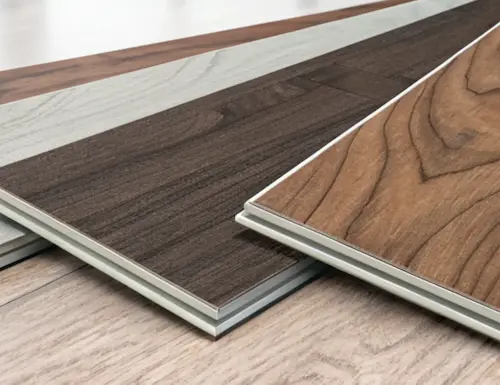
LVP isn't a renewable material — it's PVC-based. But it has a legitimate place in an eco-conscious flooring conversation for one specific reason: indoor air quality. Standard flooring products can off-gas volatile organic compounds (VOCs) from adhesives and finishes at 2,000–5,000 µg/m³ in the days after installation. FloorScore and GREENGUARD Gold certified LVP products stay well under 500 µg/m³.
In Illinois homes where windows stay closed for months at a time, that difference is meaningful — especially for households with children or anyone with respiratory concerns. The Illinois EPA recognizes low-emission materials as a meaningful factor in healthier indoor environments.
LVP is also one of the longest-lasting low-maintenance options available. A floor that doesn't need replacing for 20–30 years produces less cumulative waste than cheaper alternatives replaced every 8–10 years. See the full range on our vinyl flooring page.

Other Sustainable Options on the Market
Simple Flooring doesn't currently install bamboo or cork, but both appear regularly in sustainable flooring conversations — so here's an honest overview.
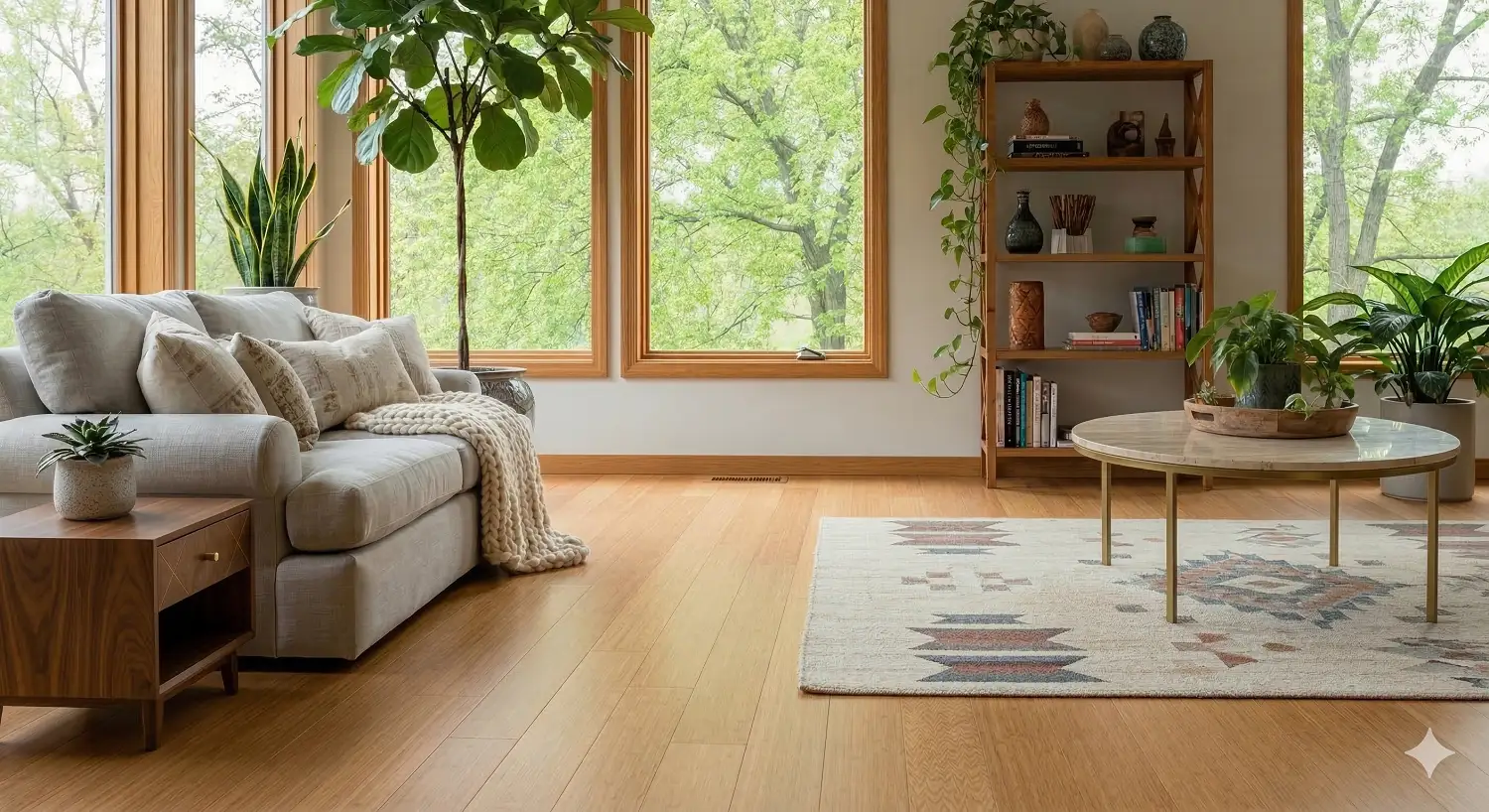
- Bamboo is technically a grass, not wood, and it reaches harvest maturity in 3–5 years versus 20–80 for hardwood species. Strand-woven bamboo is harder than most domestic hardwoods. The caveat: most bamboo is manufactured overseas, and some lower-grade products use formaldehyde-containing adhesives. Look for FloorScore or FSC certification before purchasing, and factor in the transportation footprint when comparing it to domestic FSC-certified wood.
- Cork is harvested from the bark of cork oak trees — the tree is never cut down, and the bark regenerates within three years. It's naturally antimicrobial, comfortable underfoot, and an excellent sound absorber. The main limitations for Illinois homes: UV exposure fades cork over time, and it needs resealing every 3–5 years. Avoid installing it in rooms with significant south- or west-facing sun exposure.
Both are genuinely sustainable materials — we just don't carry them. If either interests you, we're happy to point you in the right direction.
Simple Flooring: Eco-Friendly Flooring Done Right in Illinois
Choosing sustainable flooring is straightforward when you're working with a team that knows the materials, the certifications, and how each product performs through Illinois seasons. Simple Flooring installs FSC-certified hardwood, reclaimed wood, engineered hardwood, and low-VOC vinyl across the Chicago metro area. Contact us today for a free estimate and honest guidance on what actually makes sense for your home.