.svg)
.svg)


.webp)


.svg)
A commercial floor takes more abuse in one month than a home floor sees in a decade, and the wrong pick shows up fast: cracked tile, flattened carpet, or a slip-and-fall claim. Simple Flooring installs and maintains commercial floors across Chicago retail stores, offices, restaurants, and warehouses through our Chicago flooring installation services, and this article breaks down what holds up in 2026, what it costs, and which federal rules apply.
Quick answer: LVT/SPC works well for offices and retail, while epoxy or polished concrete holds up in warehouses and industrial spaces.
Which Commercial Flooring Should You Install in 2026?
.webp)
The right material depends on how a space gets used, not on a single default pick. Retail floors and offices lean on rigid-core vinyl for a mix of moisture resistance, comfort, and design range, while a distribution center or production floor calls for polished concrete or an epoxy system built for chemical exposure and constant load.
- Highest durability per dollar: Epoxy and resinous systems.
- Shortest install window: Rigid-core LVT/SPC.
- Best sound control: Carpet tile.
- Lowest 10-year maintenance cost: Polished concrete.
Each of these categories gets a full breakdown, including real per-square-foot pricing, in the sections below.
6 Factors That Determine the Right Commercial Floor
A residential floor sees a family. A commercial floor sees the public, and that changes the math on every decision. The factors below apply whether the project is a 500-square-foot boutique or a 200,000-square-foot distribution center:
- Foot traffic volume: A retail entrance or hospital corridor sees thousands of passes a week, while a private office sees dozens.
- Moisture and chemical exposure: Kitchens, labs, and loading docks need sealed, chemical-resistant surfaces, not just water-resistant ones.
- Sound transmission: Open offices and multi-tenant buildings need flooring that absorbs noise rather than amplifying it.
- Slip resistance: Entryways, ramps, and wet-process areas carry the highest fall risk and the highest liability exposure.
- Cleaning and labor cost: A cheaper material that needs daily buffing or frequent grout repair can cost more over ten years than a pricier, low-maintenance floor.
- Turnaround time: A retail buildout or restaurant renovation often has a fixed opening date, and cure time can make or break the schedule.
Weigh a space against those six factors, and the right flooring type usually becomes obvious pretty fast.
6 Commercial Flooring Types That Hold Up in 2026
These six categories cover most commercial projects in 2026. Each one fits a different combination of traffic, moisture, and budget.
Luxury Vinyl Tile and Rigid Core (LVT/SPC)
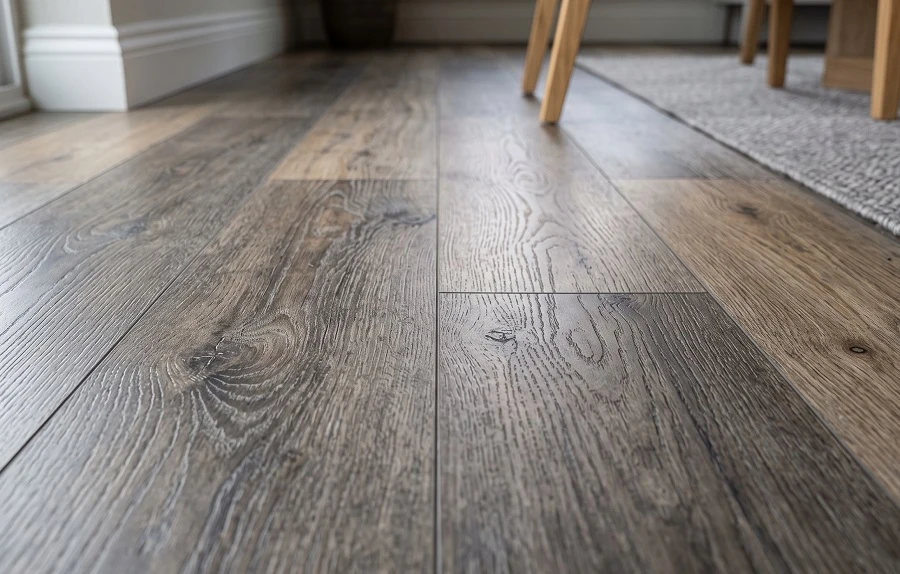
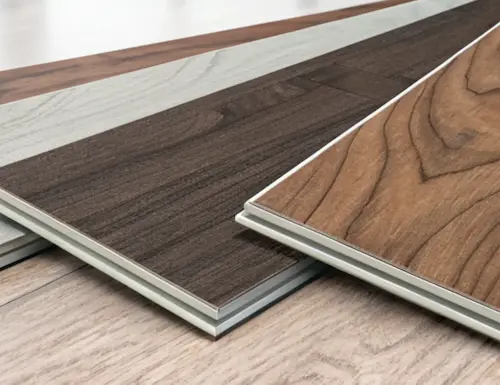
LVT uses a flexible PVC core, while SPC (stone plastic composite) uses a rigid core that resists dents and temperature swings better than standard laminate. Both are waterproof, install over most subfloors in a day or two, and come in wide-plank wood-look and stone-look finishes with embossed textures that hide scuffs.
A thicker wear layer (0.55mm or more) is worth the added cost in lobbies and sales floors where traffic is constant, and most commercial-grade products carry a 10- to 20-year commercial wear warranty. Installed cost runs 3–7 per square foot. The main limitation: heavy point loads, such as fixed equipment legs or rolling chair casters without mats, can dent the surface over time.
Polished Concrete
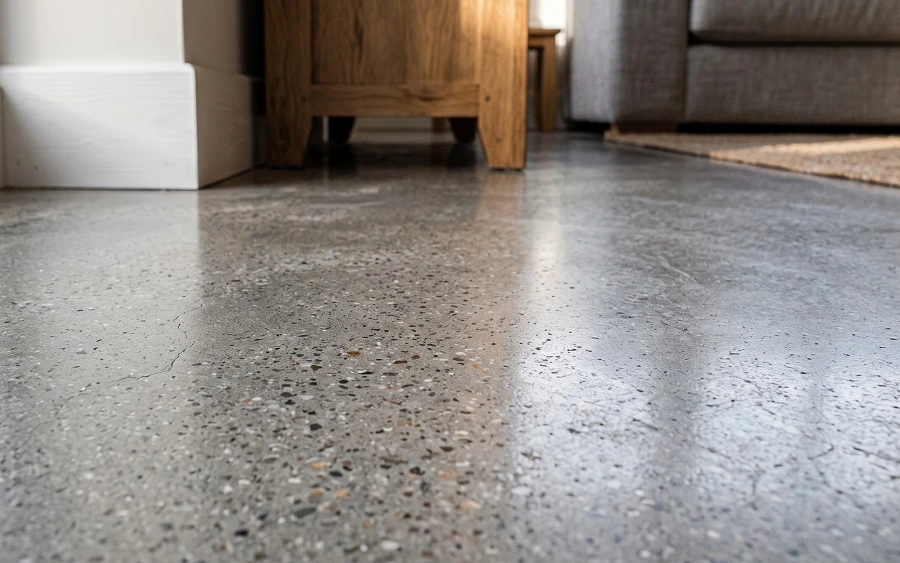
Polished concrete grinds and seals an existing slab into a hard, reflective surface with no separate wear layer to replace, and gloss level can be dialed from a matte satin finish up to a high-shine polish depending on the traffic and lighting in the space. It holds up to forklifts, pallet jacks, and heavy racking, and it needs no adhesive or seams that can fail.
Because it uses the existing slab, it also skips the tear-out and disposal cost that comes with replacing a worn floor covering, and a properly sealed slab can run 20 years or more before it needs re-polishing. Installed cost runs 4–10 per square foot. It's unforgiving underfoot for staff who stand all day, and it can be slippery when wet unless an anti-slip sealer or additive is applied.
Epoxy and Resinous Systems
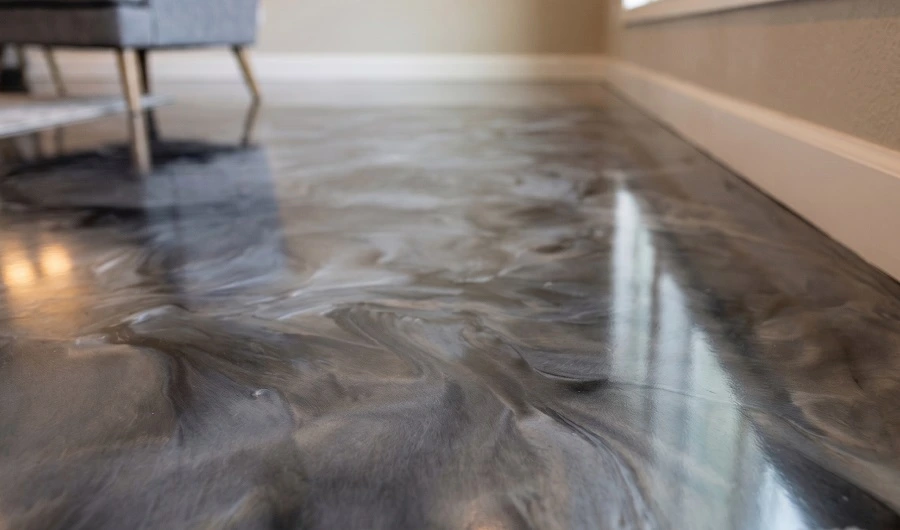
Epoxy, urethane, and polyaspartic coatings create a seamless, chemical-resistant surface used in food processing, manufacturing, and healthcare back-of-house areas, and the system can be formulated to resist specific exposures such as acids, oils, or repeated hot-water washdowns. Color flake and anti-slip additives can be built into the system for OSHA-compliant walking surfaces in wet zones, and floor markings for traffic lanes or safety zones can be embedded directly into the topcoat.
Installed cost runs 3–12 per square foot, with heavy-duty systems reaching 15–30 per square foot. Cure time (often five to seven days for full traffic) needs to be planned around a facility's downtime window.
#cta_start
The Wrong Floor Costs More Than the Install
A material that looks right on paper can fail under real foot traffic, spills, or forklift loads within a year. Our crews walk the space before you commit to a system, so the floor matches how you actually use it.
#cta_end
Carpet Tile
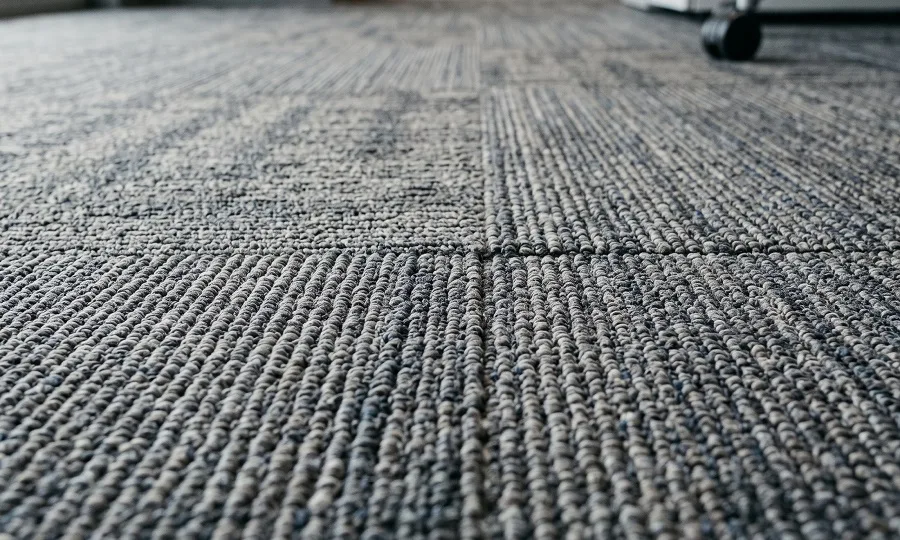
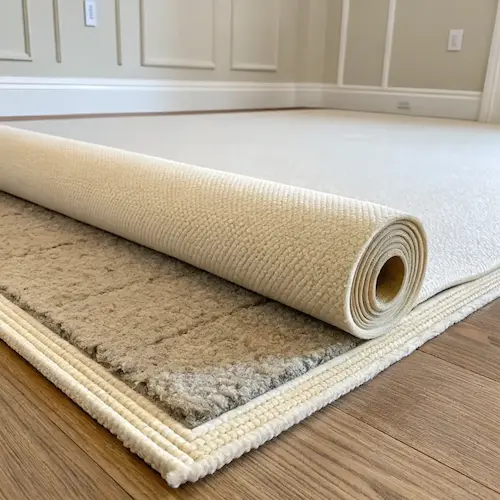
Modular carpet tile absorbs sound, cuts installation waste since damaged tiles can be swapped individually, and now comes in bold geometric patterns rather than flat corporate beige. It works well in offices, hotel corridors, and coworking spaces, and replacing a single stained or worn tile takes minutes instead of pulling up an entire room.
Backing options range from bitumen to modular cushion-back systems that add underfoot comfort in standing-heavy work areas. Installed cost runs 2–8 per square foot. It's a poor fit for kitchens, labs, or any space with regular liquid spills.
Porcelain and Ceramic Tile
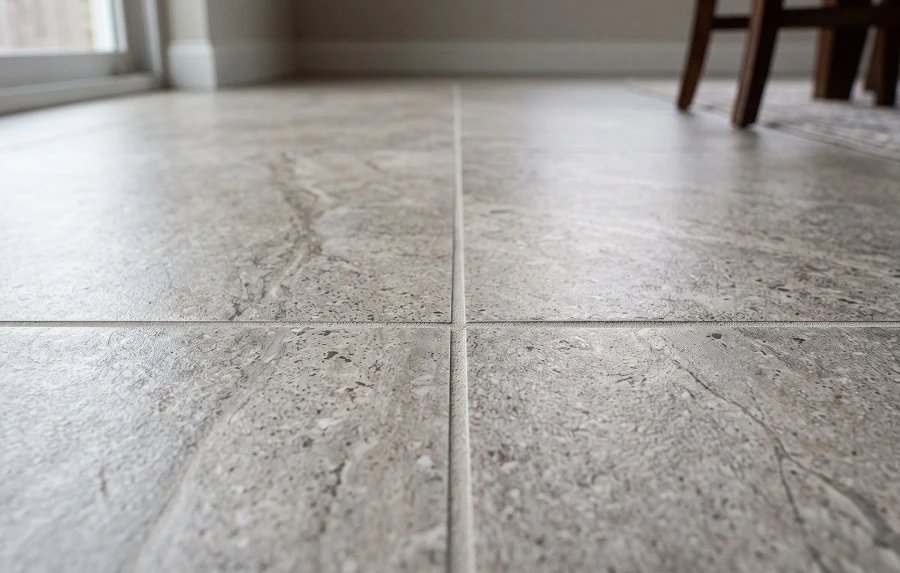
Porcelain tile resists heat, moisture, and heavy cleaning chemicals better than almost any other surface, which is why it remains standard in commercial kitchens and restrooms. Commercial specs should call for a PEI rating of 4 or 5, the industry scale for how well a glaze holds up to foot traffic, and a slip-resistance rating suited to wet areas.
Large-format tiles with minimal grout lines cut down on the grout maintenance that used to be tile's biggest drawback. Installed cost runs 5–12 per square foot. Grout still needs periodic sealing, and a dropped pan or heavy cart can crack an individual tile.
Rubber Flooring
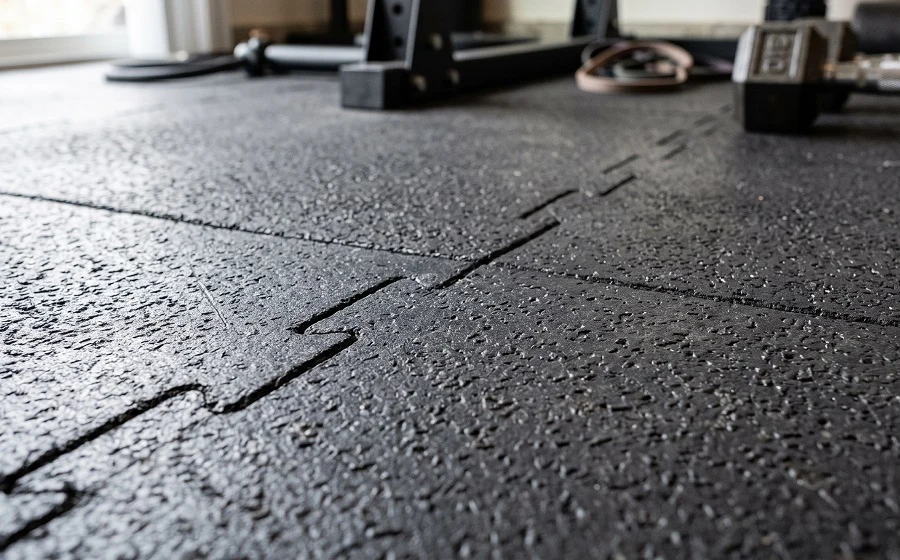
Rubber flooring absorbs impact and sound, which makes it a fit for gyms, hospital corridors, and areas near heavy equipment. It's naturally slip-resistant even when wet and holds up to rolling loads without denting, and thicknesses run from about 3mm for standard corridors up to 10mm or more for weight rooms and equipment bays.
Installed cost runs 5–10 per square foot. Color and design options are narrower than vinyl or tile, and some formulations carry a noticeable odor during the first weeks after installation.
Commercial Flooring Trends to Watch in 2026
Material choice hasn't changed as much in 2026 as the criteria behind it. Architects, facility managers, and procurement teams are asking for different documentation and design direction than they were even two years ago:
- Rigid-core LVT/SPC keeps gaining share over traditional laminate because it handles moisture and temperature swings without swelling.
- Environmental Product Declarations (EPDs) are now a standard request from architects and facility managers, not an extra line item.
- Earthy, biophilic color palettes (muted greens, warm neutrals, slate gray) are replacing cooler grays in offices and hospitality.
- Statement carpet tile with geometric and layered patterns is showing up in coworking spaces and hotel lobbies to reinforce brand identity.
- Low-maintenance systems are winning bids over cheaper materials, since facility teams are pricing floors by ten-year cost, not install-day cost.
These shifts show up in specification requirements and material sourcing well before they show up in the invoice, which is where the cost comparison below comes in.
How Much Does Commercial Flooring Cost in 2026?
Installed cost only tells part of the story. A cheap material that needs frequent buffing, grout repair, or early replacement can cost more by year five than a pricier system that needs almost no upkeep. The ranges below reflect installed cost only; ask any contractor for a ten-year maintenance estimate before comparing two systems side by side.
Material cost is only part of the compliance picture. The federal rules below apply no matter which flooring type ends up on the order.
Which Federal Rules Apply to Commercial Flooring?
Three federal standards affect flooring decisions in every commercial building, regardless of state or city.
- OSHA's Walking-Working Surfaces standard, 29 CFR 1910.22, requires floors to be kept clean, dry to the extent feasible, and free of hazards, with the employer responsible for correcting problems before an employee uses the surface again.
- The ADA Standards for Accessible Design, Section 302 require floor and ground surfaces on accessible routes to be stable, firm, and slip-resistant, and cap carpet pile height at 1/2 inch to keep wheelchair travel safe.
- EPA's guidance on volatile organic compounds flags flooring adhesives, sealants, and some carpet backing as sources of indoor VOC emissions, though no federal standard sets an enforceable VOC limit for non-industrial buildings.
Local building and fire codes add further requirements beyond these three, so a project in Chicago should also be checked against the current Chicago Building Code before materials are ordered.
The Right Commercial Flooring for Every Type of Space
Matching flooring to a space type upfront avoids a costly redesign later. Here's how these six categories typically play out across common commercial settings:
- Offices: Carpet tile in workstation areas, LVT/SPC in corridors and break rooms.
- Retail: Polished concrete or LVT for the sales floor; porcelain at entries where dirt and moisture track in.
- Restaurants and food service: Porcelain or quarry tile in the kitchen, epoxy in prep and walk-in areas, LVT or engineered wood in the dining room.
- Healthcare: Rubber or homogeneous sheet vinyl in patient corridors for sound and slip control, epoxy in labs and sterile processing.
- Warehouses and industrial: Polished concrete for standard traffic, epoxy or urethane mortar where chemicals or heavy impact are a factor.
- Hotels and hospitality: LVT or engineered wood in guest rooms, carpet tile or pattern broadloom in corridors, porcelain in bathrooms and lobbies.
Whatever the space, the material still needs to be weighed against the traffic, moisture, and budget factors before anything gets ordered.
Ready to Install Commercial Flooring in Chicago?
The right commercial floor in 2026 comes down to matching the material to the traffic, moisture, and compliance demands of the space, then pricing it over ten years instead of over the invoice. Simple Flooring's Chicago crews install LVT, epoxy, polished concrete, carpet tile, porcelain, and rubber systems for offices, restaurants, retail stores, and industrial facilities across the city. Contact us for a walkthrough and quote, and we'll help match the right flooring to your space.